WW2History.com News

|   29 April 2012

WW2History is free!

We are all incredibly pleased to announce that WW2History.com is now free to the world!

I thank all of the thousands of subscribers who have supported the site for the last two years and look forward to welcoming many more people to WW2History.com.

WW2History.com News

|   30 March 2012

WW2History will soon be free!

Soon the lock is coming off…

From the start of May – the second anniversary of the launch of the site – WW2History.com will become a free resource that anyone can access.

This means that we will no longer be taking any subscriptions from today, before the site itself goes free on Tuesday 1 May.

This is a big step forward for the site and I decided to take it only after a lot of thought. I’ve been very pleased with the success of WW2History.com as a subscription site – with several thousand subscriptions taken out. On this basis the site would, within another year or so, have paid back the cost of making it and be delivering a future of profit.

So why should I turn my back on that financially attractive future? Well, because these are times of austerity in the educational world, and having discussed the situation with school and university teachers I came to the conclusion that the site could never reach many of those who wanted it most if we carried on as we are.

That’s why I came to the decision I did. I’ll always be incredibly grateful to everyone who has supported the site during this subscription period.

WW2History.com News

|   9 June 2011

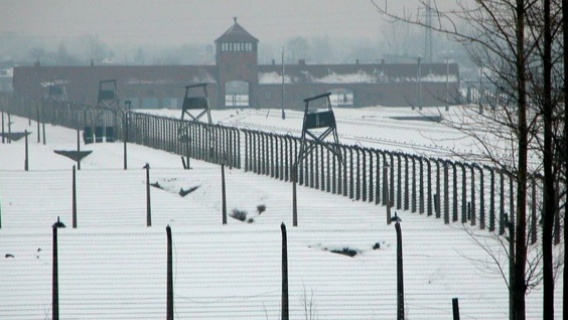
Auschwitz – a complicated history

There was more than one Auschwitz camp.

This month’s competition question for WW2History.com subscribers is proving very interesting. Not because lots of people have got the answer correct so far but because of the reverse – no one who has entered the competition has got the correct answer yet.

This is the question:

The camp at Auschwitz/Birkenau was not originally intended to hold large numbers of Jews. Who did the Nazis first think would be sent there once it was completed?

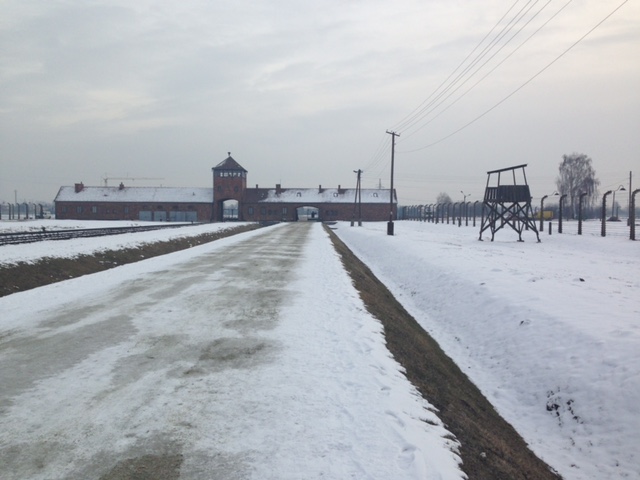
And I’m not giving too much away when I say that the answer is not ‘Polish political prisoners’ which many people seem to think it is. Polish political prisoners were indeed the first people incarcerated at Auschwitz – but at Auschwitz main camp in 1940 not at Auschwitz/Birkenau, which was not in existence in 1940. The main camp was on the banks of the Sola river near the town of Auschwitz (as the Germans called the Polish town of Oswiecim) but the Nazis only decided to build this new camp, about a mile and a half away from the old one, the following year in 1941. Read the rest of this entry

WW2History.com News

|   2 April 2011

The Open University

At the Barbican

I was fortunate enough to receive an Honorary Doctorate from the Open University at a degree ceremony in London today, where hundreds of OU graduates also received their degrees.  This is what I said in my speech to say Thank You.

It is a particular honour for me to receive this award from the Open University – an institution I have long admired. In fact, I first heard about the OU when I was at school and one of my science teachers was trying to gain an OU degree whilst also carrying on with his full time teaching job.

I remember thinking then that in order to get an OU degree you didn’t just have to have the intellectual ability of a student who was working full time for a degree at a traditional university, but you also needed to possess many other personal qualities as well, including an extraordinary level of commitment and determination.

I also suspect that most of you couldn’t have managed to achieve your degree without the love and support of someone else. Perhaps that someone else is with you today. Never forget the debt you owe them. I know I could never have achieved anything over the last twenty five years without the love and support of my family.

So I hugely admire everyone here who has managed to gain a degree from the Open University. And the single quality each of you possesses that I most admire is best summed up in words of advice that were written some years ago by the Dalai Lama. This was his advice for life: ‘Never Give Up. No matter what is going on around you. Never Give Up.’

Many times you must have thought of giving up – but you never did. I congratulate you. Thank you again.

WW2History.com News

|   4 December 2010

Newly added

For subscribers to WW2History.com we had been planning to add a long essay on Adolf Hitler this month to the Key Leaders section, but because of the interest in last month’s competition on Stalingrad, we’ve decided to add an extraordinary piece of testimony instead. The essay on Hitler will appear next month.

Valentina Krutova was a child in Stalingrad during the war, and the history of how she and her elder brother and younger sister survived the horror is one of the most moving pieces of testimony I have heard from a survivor. I think we often focus too much on stories of soldiers in battle, and so to listen to the effect of war on children adds a crucial perspective to the history that is often lacking.

WW2History.com News

|   12 July 2010

The Timeline

The interactive WW2History.com Timeline

I just got back from a meeting with the brilliant Phil Draper of Sunday Publishing who has been working with me on making WW2History.com for 18 months now (though it seems like most of our lives!) We were going through all of the analytics showing how many people access what on the site – in essence learning what’s popular and what isn’t.

One thing was really surprising to me. Which was that whilst a number of the videos (like D Day and the Holocaust ones) were popular, as were quite a few of the expert interviews, what hasn’t been used as much as I thought it would is the interactive Timeline which is accessible from the homepage (click on the middle box on the non-subscriber homepage, or on the toolbar above marked ‘Interactive Timeline’)

I thought this surprising since I think it is a really interesting device. (Though I know from my time commissioning TV history programmes that just because I find something interesting it doesn’t necessarily mean other people will as well….) So I put in a plea here for the Timeline, and I also want to explain why I think it reveals things about this history in a useful way.

In essence, what I like about this device is that it shows two things that I think we often forget about this history. The first is that there were brief, intense periods of the war that were much more important, historically speaking, than all the rest. And second, that during these intense moments there was a great deal of interconnectivity across the various geographical fronts in the war – much more, I believe, than many people think.

Take the example above, of December 1941. I think what the Timeline clearly shows is how enormously significant this one month was:  on the Eastern front because of the battle of Moscow, in the Far East – obviously – because of Pearl Harbour – and in the context of the development of the Holocaust because Hitler announced that month to Nazi leaders that the Jews were to be annihilated.

In a way, all of these things are interconnected. Stalin would never have launched an offensive in December 1941 if he hadn’t have known that the Japanese were not going to invade Siberia but attack the Western powers instead, and Hitler wouldn’t have made the exact speech he did about the Holocaust if he had not thought that the entry of the USA had brought about the ‘world war’ which he had ‘prophesied’ would lead to the ‘extermination of the Jews.’ Now, I don’t want to make too much of this. I think the Nazis, for instance, were on the path to the ‘Final Solution’ without Pearl Harbour. But events occurred in the exact way they did because of this interconnectedness and you see that clearly on the Timeline.

Anyway, forgive the special pleading. Maybe I’ve got it all wrong and people don’t find the timeline as interesting as I do, but maybe you haven’t tried it out yet, which is why I’m writing this….

WW2History.com News

|   11 June 2010

WELCOME AMERICA!

WW2History.com has just gone live in the United States of America.

And since we have so many fine American historians on the site, and since all of my last documentary series were made in co-production with various American colleagues and friends, it’s a moment that I especially want to mark.

One small way of recognizing this significant day in the brief history of WW2History.com is to feature an American in our monthly competition. This month, subscribers to WW2History.com are asked to name this American marine.

Not as famous or Nimitz or Patton, he did still play an important part in key battles in WW2 and went on to become Commandant of the Marine Corps. The first three correct answers naming this tough Marine, taken at random from the correct suggestions made, will win a signed hardback copy of Michael Burleigh’s brilliant new book – ‘Moral Combat – a history of World War II’. But remember, you need to be a subscriber to the site to enter the competition and you can only do so via the form available in the Members’ Zone of the site, accessible via the subscription homepage.