Posts Tagged ‘Hitler’

WW2 Anniversary

|   11 December 2011

Declaring war on America

Seventy years ago today Germany declared war on America.

Many people are mystified by Hitler’s decision to take on the most powerful economic power in the world – especially since the German army was mired in a conflict with the Soviet Union at the time, and Hitler had no real way of ever conquering America. What were the Germans going to do, invade Manhattan? They hadn’t even been able to cross the English Channel to land on the beaches of the south coast, so what chance did they have of ever crossing the vast Atlantic?

But Hitler’s thinking was not so crazy, and this decision is easy to explain. In essence, Hitler believed that the Germans were effectively already at war with America. The German declaration of war of 11 December 1941 accused Roosevelt of ‘virtually’ bringing America into the war three months before, as result of his decision to allow US ships in pursuit of their convoy protection duties to attack German warships in the Atlantic .

The head of the German navy, Grand Admiral Raeder, had told Hitler in the autumn of 1941 that it was all but impossible for the German navy to prevent American convoys reaching Britain. How could German submarines know which convoy protection ships were American – and avoid them – and which were British – and attack them?

Moreover, Hitler was concerned that in the wake of the Pearl Harbour attack and the entry of America into the war against Germany’s ally, Japan, it was likely that Roosevelt would shortly declare war on Germany himself. Hitler, for reasons of prestige and no doubt still smarting from the British and French decision to declare war on Germany on 3 September 1939, thought that great nations declared war on other nations, they didn’t wait for others to decide to fight them.

It didn’t even matter to Hitler that Todt, his armaments minister, told him that with the resources of America behind them, the British were all but unbeatable. Hitler still believed that Germany’s future would be decided on the Eastern front. If the Soviet Union could be defeated then American involvement in the war would be an irrelevance.

Those were the thoughts that were in Adolf Hitler’s mind 70 years ago today.

WW2 People

|   21 May 2011

Sympathy for the Devil

Is it legitimate to express ’sympathy’ for Adolf Hitler?

This week the Danish film director Lars von Trier was banned from the Cannes film festival for confessing – tongue in cheek, one suspects – that he was a ‘Nazi’ and that he had ’sympathy’ for Adolf Hitler.

Von Trier craves attention and loves to shock – that much is obvious not just from his previous history at Cannes, but also from earlier remarks at the same press conference at which he announced he was a Nazi, when he said that various attractive actresses had asked him to make a ‘Hot sex’ film as his next project. He is clearly a silly man.

But it is the reaction to his remarks about Hitler that is really intriguing. Suppose he had said that he was a ‘Communist’ and had ’sympathy’ for Stalin  – would he have been chucked out of the Cannes film festival? I suspect not.

Read the rest of this entry

WW2 Relevance

|   6 May 2011

Bin Laden, Hitler and Munich

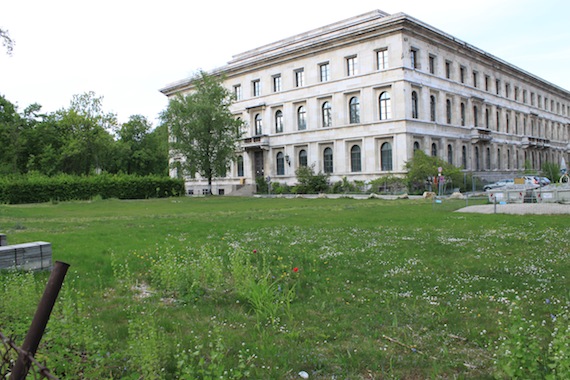
The site for the new document centre, next to the building that housed Hitler’s office in Munich.

Hitler and Bin Laden, both mass murderers whilst alive, now have something in common whilst dead – nobody knows precisely where their bodies are. Bin Laden’s remains were  chucked by the Americans into the ocean and Hitler’s charred bones were taken from Berlin by the Soviets and have remained hidden from view ever since. His skull was supposed to be in a Moscow secret museum, but even that is in doubt today.

Both the Americans and the Soviets clearly thought it vital to deny each of them a grave. As far as Hitler is concerned, as long as the Nazis ruled Germany, he most certainly wanted his grave to become a sacred place. As I told a BBC journalist this week, whilst Hitler did not believe in an afterlife in the sense of a heaven or hell, he did believe that he would live on here on earth, with pilgrims visiting his sarcophagus. As a result it was claimed by many in Munich after the war that any Hitler memorial – even museum – might become a ’shrine’ – so none was ever built. As a result no proper place existed in the city for the public to visit in order to understand why and how Hitler and the Nazis came to call Munich home.

Read the rest of this entry

WW2 Relevance

|   19 March 2011

Gaddafi and the Nazis

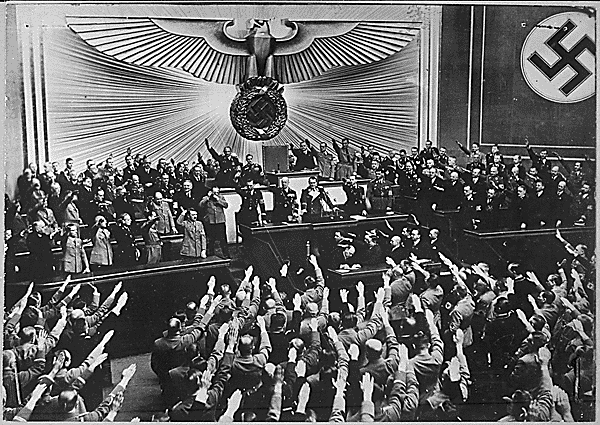
Hitler in the Reichstag

I’m normally extremely suspicious of any direct comparisons between events today and events in history. Rhetoric, at the time of the Iraq war, like ‘Saddam Hussein is another Hitler’ always made me irritated. No one is ‘another’ Hitler. Historical events and personalities exist only in the past and cannot be replicated today.

So I’ve been surprised that so many of Colonel Gaddafi’s words and actions have reminded me of the Nazis. For example, Gaddafi’s belief that straightforward lies about his own actions can work in propaganda terms certainly matches Hitler’s own belief. The Nazis pretended that they entered Poland on 1st September 1939 in response to Polish ‘aggression’, just as Gaddafi’s representatives today said that they are attacking Benghazi only in response to ‘aggression’ from rebels.

Read the rest of this entry

WW2 Relevance

|   26 February 2011

Why did the Germans fight to the end?

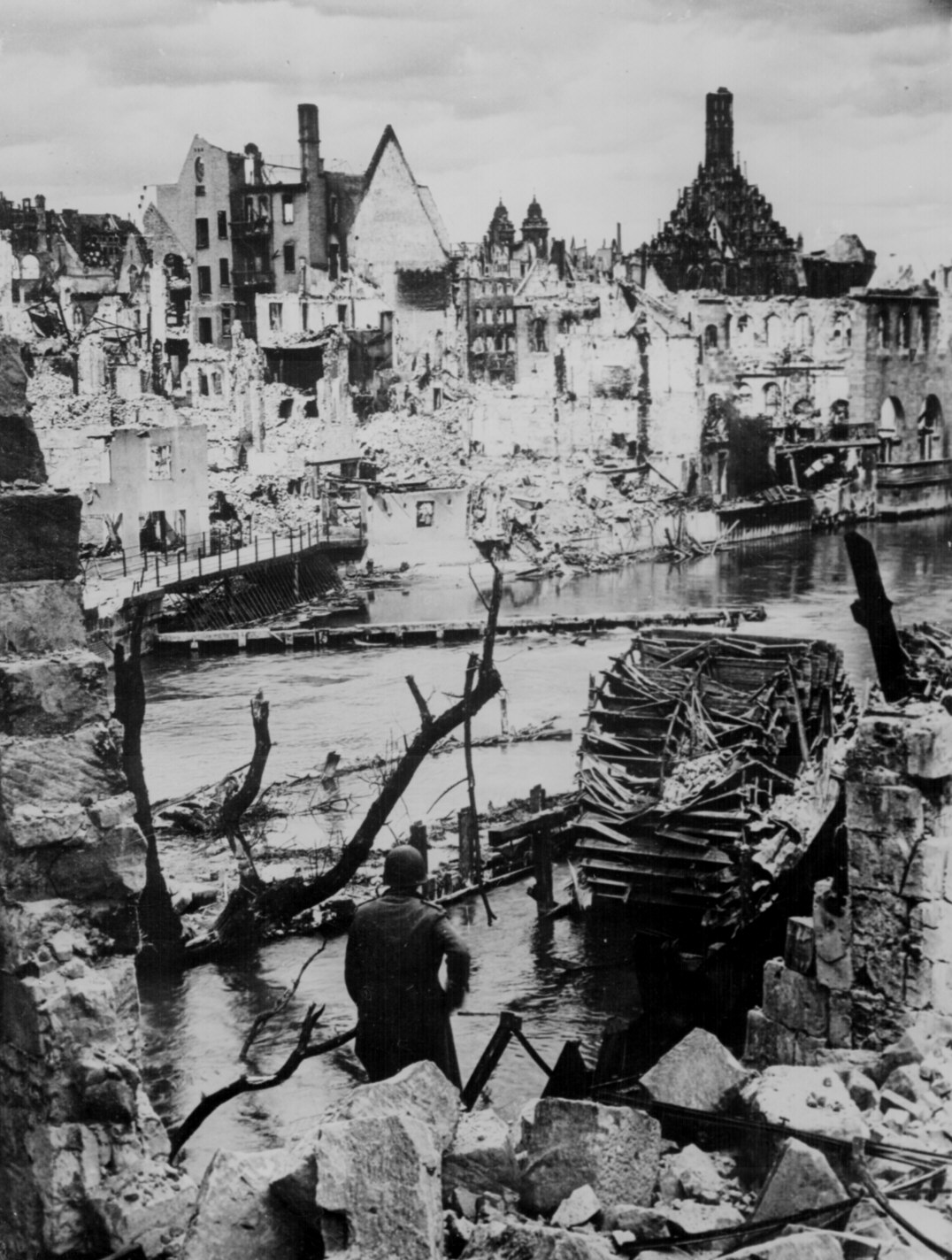
Much of Germany was in ruins by the time the Nazis gave up.

Recent events in Egypt, Tunisia and now Libya have shown us how quickly dictatorships can be challenged and (in the case of the first two countries) overthrown.

Which leaves us once again with one of the enduring mysteries of WW2 – why did the Nazi regime hold out until the spring of 1945 when Red Army soldiers were just yards from Hitler’s bunker in Berlin? After all, Mussolini had been ousted in the autumn of 1943, as soon as the Italians realized which way the war was going. So why couldn’t the Germans have got rid of Hitler at the same time?

The answer to that question tells us a great deal about the way revolutions can happen – or not happen – and how dictators can fall. Ultimately there were two crucial reasons why Hitler was not brought down by the popular discontent for the war which no doubt existed in Germany after the defeat at Stalingrad in early 1943. The first reason is practical, the second is institutional.

Read the rest of this entry

WW2 People

|   19 January 2011

Hitler and aging

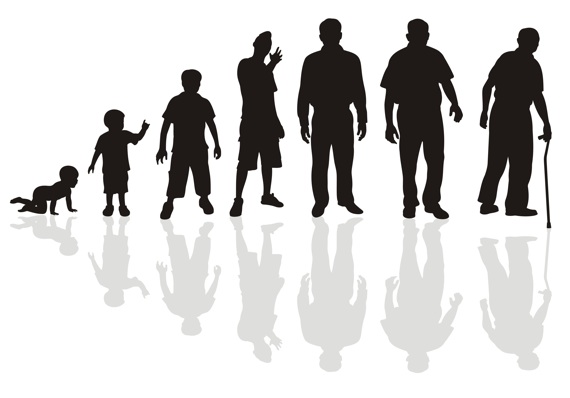
Our journey

It was my birthday this week – which is not a cause for wild jubilation once you are over forty five in my experience, and, unfortunately, I am most certainly over forty five.

But it got me thinking about how our understanding changes as we age. And that in turn made me think about the research I am doing on Hitler at the minute. Hitler was terrified that he might die before his ambitions could be accomplished. And that fear increased exponentially as he aged. Indeed, one of the reasons why he rushed into war was a fear that he might not be fit enough in years to come to lead Germany. He was also a terrible hypochondriac, constantly thinking that an upset stomach was the first sign of cancer. Because he thought he was sent by ‘providence’ to rule Germany, he no doubt was furious that ‘providence’ had not made him immortal.

Read the rest of this entry

WW2 Anniversary

|   26 November 2010

The most appalling film in history

The hate-filled Der ewige Jude (‘The Eternal Jew’) had its premiere 70 years ago this month.

Next Monday, 29 November, is the 70th anniversary of the first public showing of what is, I believe, the most appalling film ever made – Der ewige Jude (‘The Eternal Jew’)

This is the film that subsequently became infamous for scenes intercutting footage of Jews in the Polish ghettos with film of rats. It is a disgusting and crude piece of work that demonstrates the Nazis’ anti-Semitic beliefs at their most base. But, as I discovered when I researched the origins and production of the film some years ago, ‘Der ewige Jude’ offers us an insight into the propaganda process of the Nazis that is more revealing than the film itself.

Read the rest of this entry

WW2 Relevance

|   19 November 2010

Does it matter who becomes King or Queen?

We have no say over who wears the crown. Does it matter?

Looking at the interview this week with Prince William and Kate Middleton I thought two things. The first was – what a perfectly nice young couple. The other was – this perfectly nice young couple will become King and Queen one day, and not one citizen of the United Kingdom will ever have had any say about it.

But does it matter? After all, many years ago, when I was taught the history of the British Constitution, I was told that the great advantage of an unelected Head of State was not so much the power they possessed as the ‘power they denied others’ as a result of their presence. Trouble is, a study of the relationship between one British monarch and the Nazis has made me think that my teachers were somewhat naive about the nature of power. In fact, it can matter a huge amount who is King or Queen.

Read the rest of this entry

WW2 Relevance

|   19 October 2010

Resistance to Hitler

Hitler’s bunker at the Wolf’s Lair in wartime East Prussia.

In Berlin, in the early evening of 20 July 1944, Ludwig Beck, one of the leading conspirators in the plot against Hitler, posed a vital question to a fellow conspirator, General Friedrich Olbricht.

Would the sentries who guarded their resistance headquarters be prepared to fight against the Gestapo when they appeared? Crucially, would they be prepared to die for Olbricht?

Olbricht replied that he was unsure.

It was a dramatic moment in the conspiracy, and one that I’ve been thinking about a lot recently. The problem Beck and his fellow conspirators faced was that they didn’t know whether Stauffenberg had managed to kill Hitler at his Headquarters at the Wolf’s Lair in East Prussia earlier that day. Reports differed. Some said Hitler was dead, others that the bomb Stauffenberg had planted had merely injured the German leader. And so, in the shadow of this uncertainty, Beck tried to hold the conspiracy together. It mattered not whether Hitler lived, he said, the time had come to fight back regardless. The only trouble was that many of his fellow conspirators didn’t see the situation in such black and white terms.

Read the rest of this entry

WW2 Anniversary

|   12 October 2010

Invading Russia – the “sensible” option.

The Untersberg – mountain of myth

70 years ago, Adolf Hitler stood on the terrace of his house, the Berghof, above Berchtesgaden in southern Germany, and contemplated this view. The massive Untersberg, directly in front of him, was the mountain in which legend said that the Emperor Charlemagne slept, ready one day to rise again.

And in 1940, Hitler believed that a decision he had just reached would make him greater than Charlemagne, the man who created the German monarchy, greater indeed than any German who had ever lived. Because Hitler – and Hitler alone – had decided that Germany should invade the Soviet Union. With hindsight it seems to have been a catastrophic decision – one that led directly to Germany’s defeat. But that was not how most people saw it at the time. In fact, most German Generals thought that the decision to invade France in May 1940 had been much more risky – and that had brought victory in six weeks.

How much resistance could the Red Army – weakened by Stalin’s purges in the 1930s and broken by failures during the Winter war against Finland a few months before – actually put up? Well, most informed opinion agreed with General Jodl of the German High Command who said the Soviet Union would be ‘proved to be a pig’s bladder; prick it and it will burst.’

Read the rest of this entry